Why Curves Are Here to Stay in Home Design
Straight walls, square rooms and long runs of joinery form the backbone of most homes. Curves bring something different. An archway, rounded vanity or softly curved wall interrupts those hard lines and helps a room feel more relaxed without changing the whole design.
That's why curves in interior design have lasted well beyond a short-lived trend. They're flexible enough to work across different styles, from Mediterranean-inspired homes to clean contemporary bathrooms, and you can introduce them at almost any scale. The key is choosing where a curve will add the most value, then giving it enough space to be noticed.
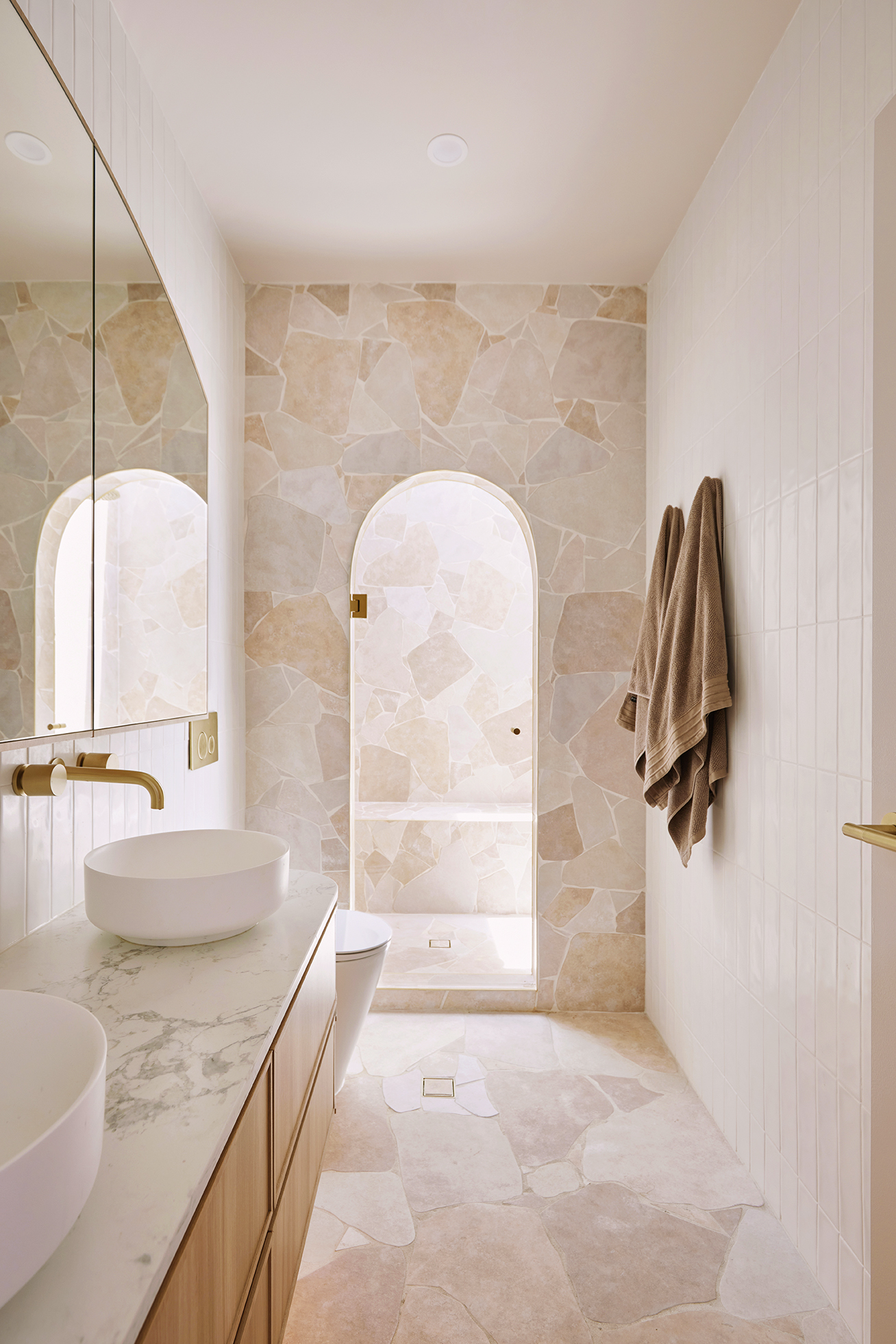
Why curved interiors continue to work
Curves feel easy on the eye because they guide your gaze through a room rather than bringing it to an abrupt stop. In an open-plan home, a rounded island or curved wall can make movement between spaces feel more natural. In a bathroom, an arched shower opening or vanity softens the many straight edges created by walls, mirrors, cabinetry and tiles.
They also add interest without relying on a bold colour or busy pattern. A simple plaster arch can add character while keeping the overall palette calm. It's a useful way to give a room more personality without making it feel busy.
Curves aren't tied to one finish, either. You'll see them in rendered walls, timber joinery, stone benchtops, mirrors, shower screens and tiled surfaces. That flexibility is a big reason curved interiors continue to feel relevant.
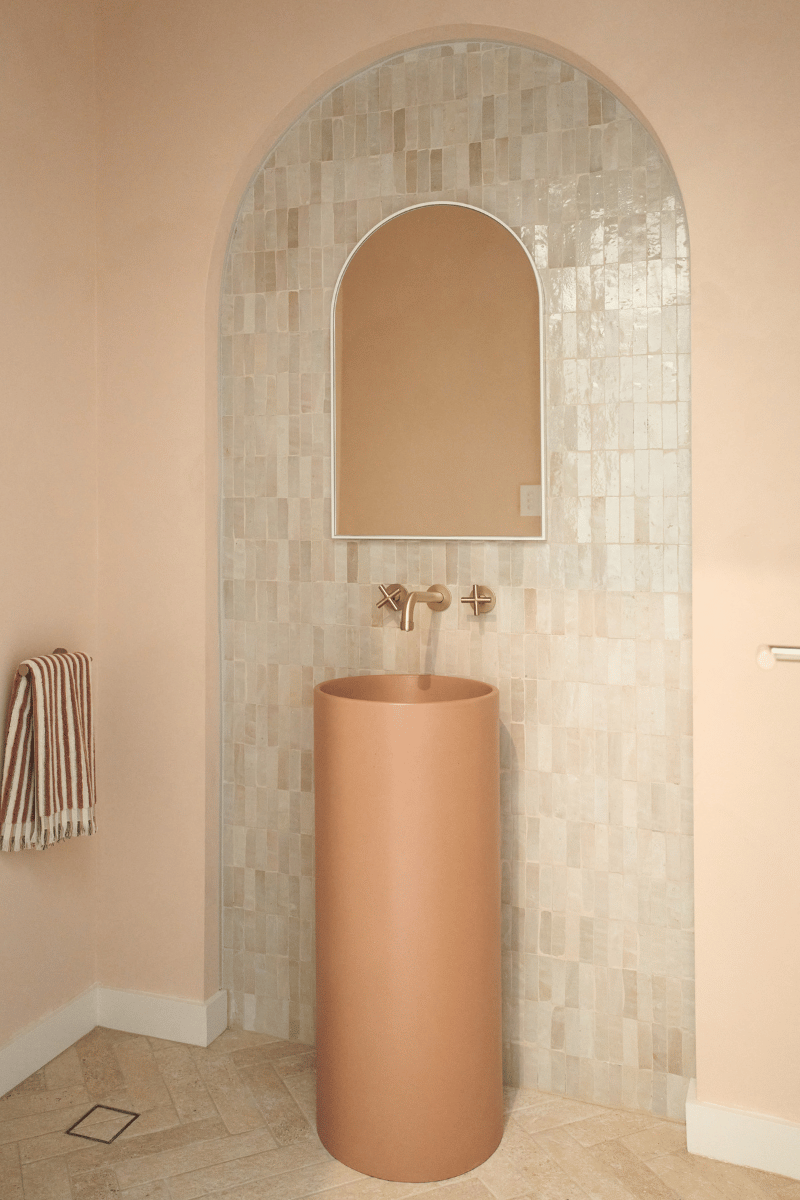
Start with the architecture
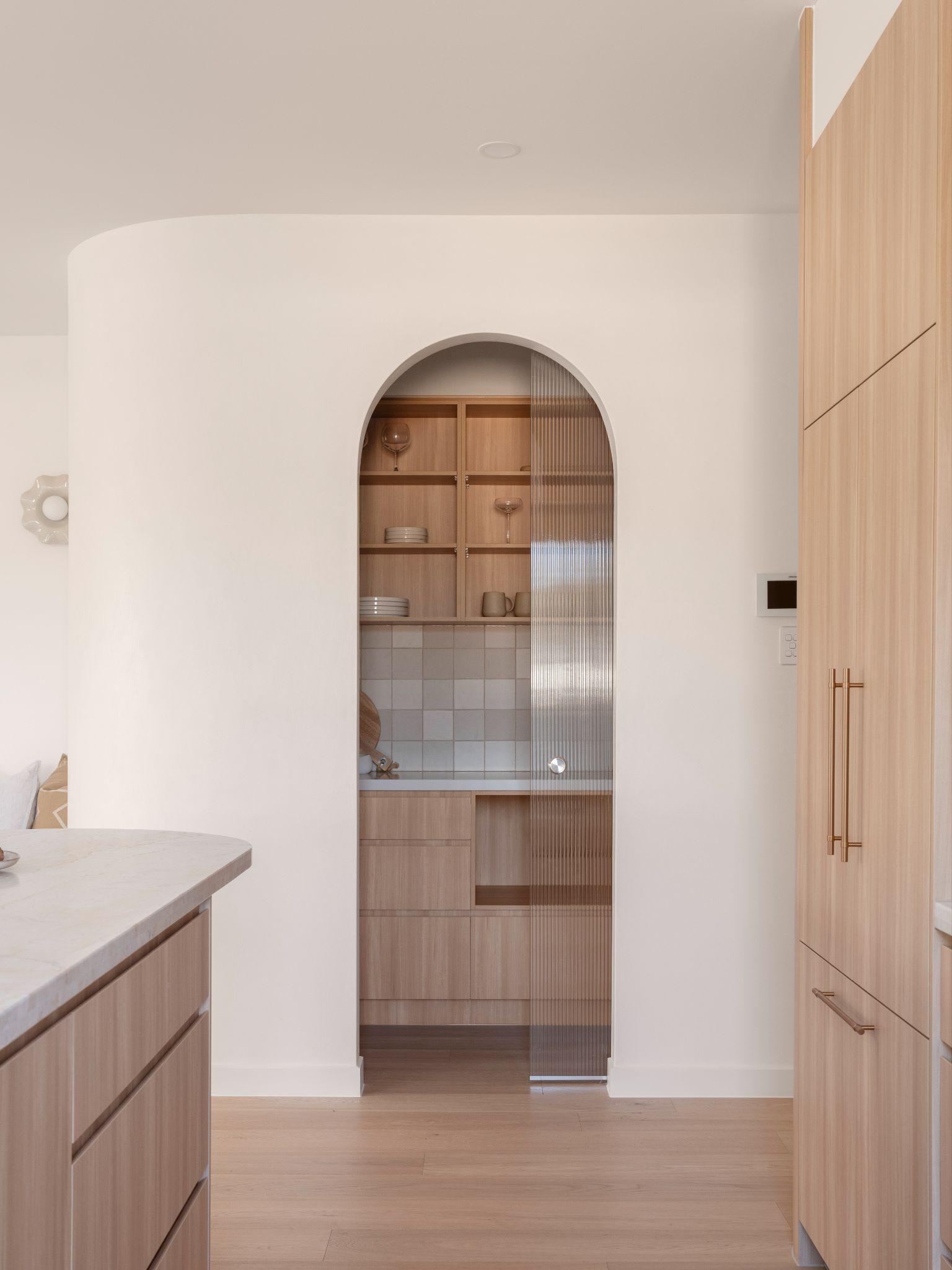
If you're planning a renovation or new build, architectural details are a natural place to introduce curves. Arched doorways can create an easy transition between rooms, while a curved nib wall can shape a shower or provide privacy without closing the space in.
Curved walls work best when they solve something as well as adding visual interest. A rounded corner can improve the path through a narrow area. A curved shower wall can separate wet and dry zones. An arched opening can frame a view into the next room.
Think about the curve early, especially if it affects framing, waterproofing, cabinetry or tile installation. Your builder, waterproofer and tiler will need to understand the radius and how each material will finish around it.
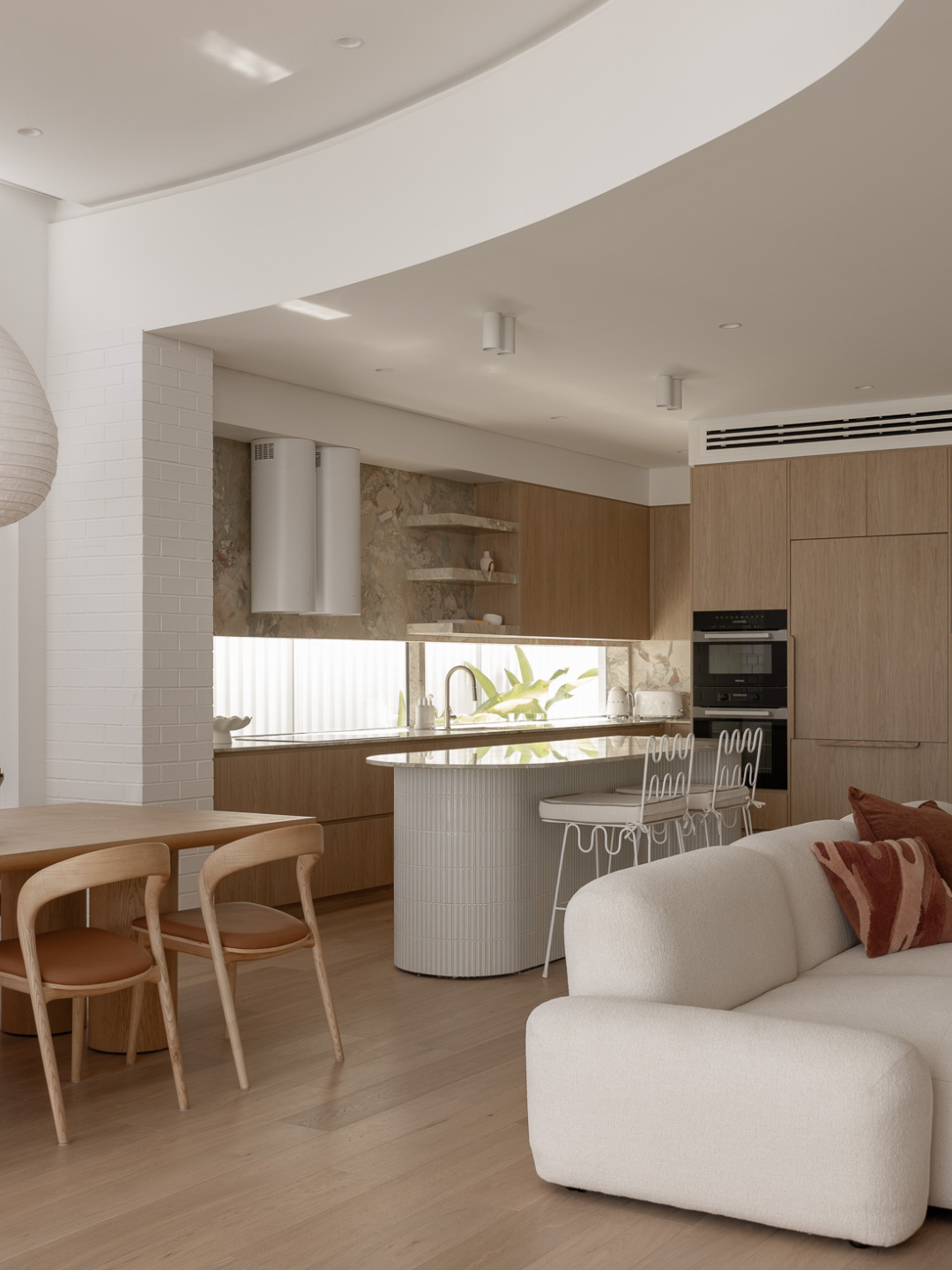
Bring curves into joinery and smaller details
You don't need to change the structure of your home to use curves. Rounded kitchen islands and benchtops can make a smaller space feel less jagged and easier to move around, especially where a sharp corner would sit close to a walkway. Curved vanity ends, fluted cabinetry, arched mirrors and rounded shelves can bring the same softer shape into bathrooms and living areas.
Choose one or two curved elements to lead the room rather than repeating the shape everywhere. An arched mirror might echo the curve of a doorway while the vanity and tile layout stay straight and structured. The two shapes work together without the room feeling overdone.
The shape of the curve changes the mood. A long, sweeping curve feels soft and easy, while a smaller, tighter curve makes more of a statement. Look at it alongside the wall, benchtop or joinery around it before locking in the final shape.
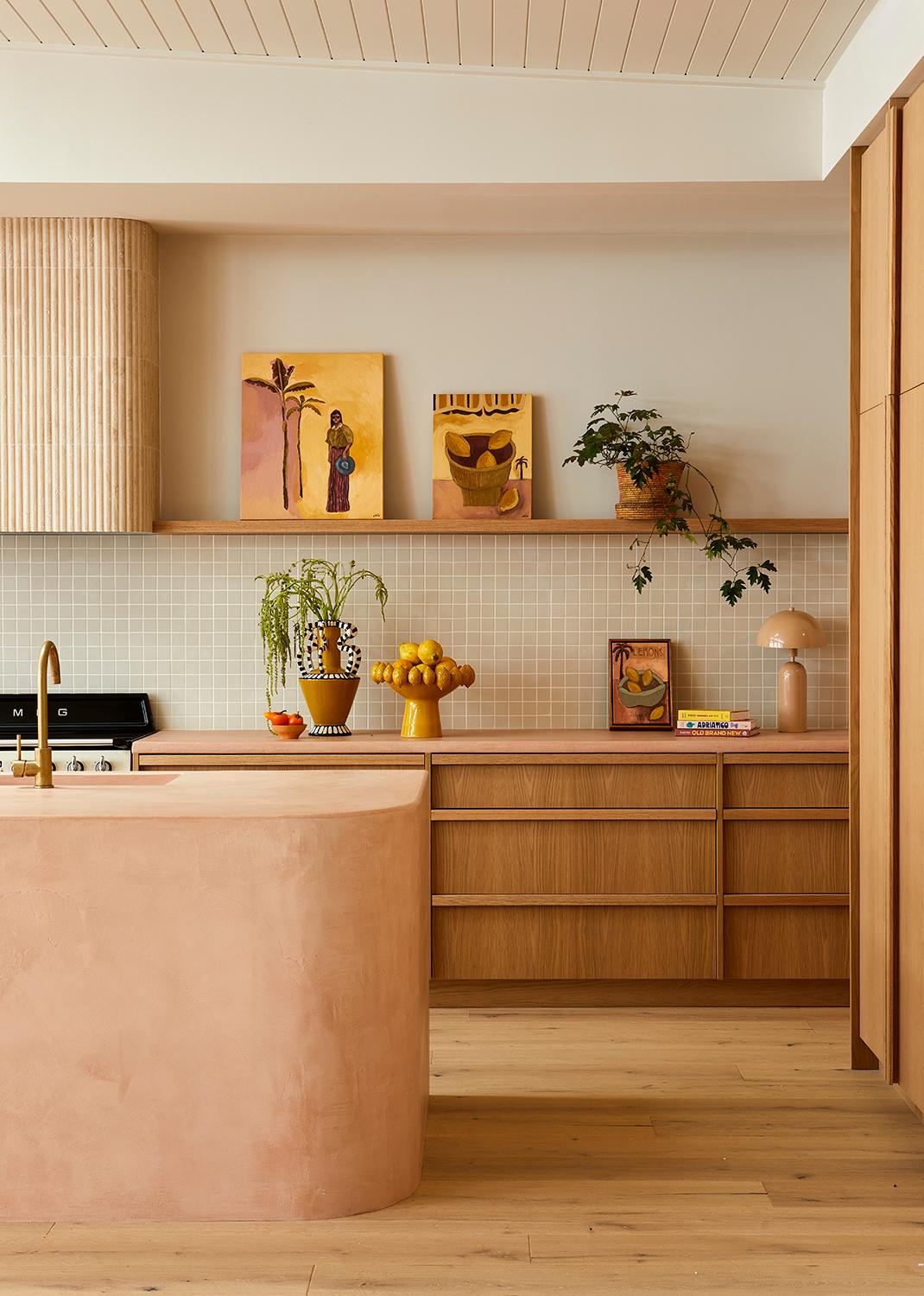
Use tiles that can follow the form
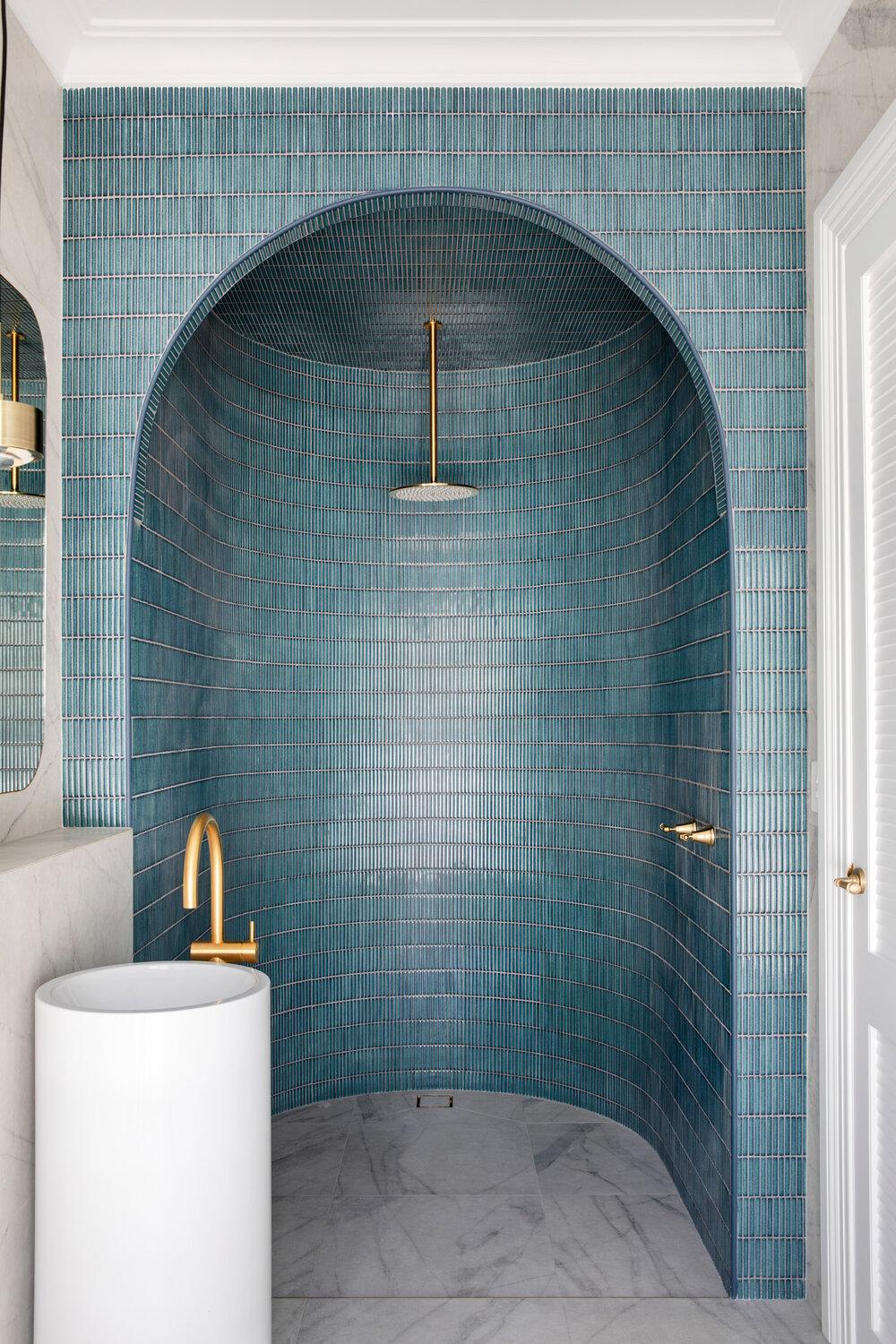
Tile choice becomes especially important when the curve itself will be tiled. Smaller formats are usually easier to wrap around a rounded surface because there's less cutting involved and the tiles can follow the shape more easily.
Mosaics are a practical option for curved walls, shower seats and rounded nib walls. Their mesh backing lets the individual pieces move with the surface, while the repeated grout lines help define the shape. Small subway, square and finger formats can also work well, depending on how tight the curve is and which way you want the tiles to run.
For a softly curved wall, vertical tiles can draw attention to the height and shape. Horizontal layouts can emphasise the sweep of a rounded corner. Ask your tiler to dry lay a section first so you can see how the joints will sit and where any cut tiles will land.
Tile thickness, edge details and grout joints all affect the finished result. Tight curves may need a smaller tile than you first planned, so confirm the format with your tiler before ordering.
Balance soft shapes with structure
If every element is rounded, the room can start to lose definition. Pair curves with clean lines so each shape has something to work against. A rounded vanity can sit below a rectangular mirror, or an arched shower opening can be balanced by a simple stacked tile layout.
Material changes can create the same balance. Curved plaster beside straight-laid tiles gives the architecture room to stand out. A softly rounded bench paired with square floor tiles keeps the scheme grounded.
Colour and pattern also play a role. If the curve is the main feature, a tonal tile palette lets the silhouette do the work. If the architecture is simple, colour variation or a checkerboard floor can bring more energy into the space.
Curved bathroom design in real homes
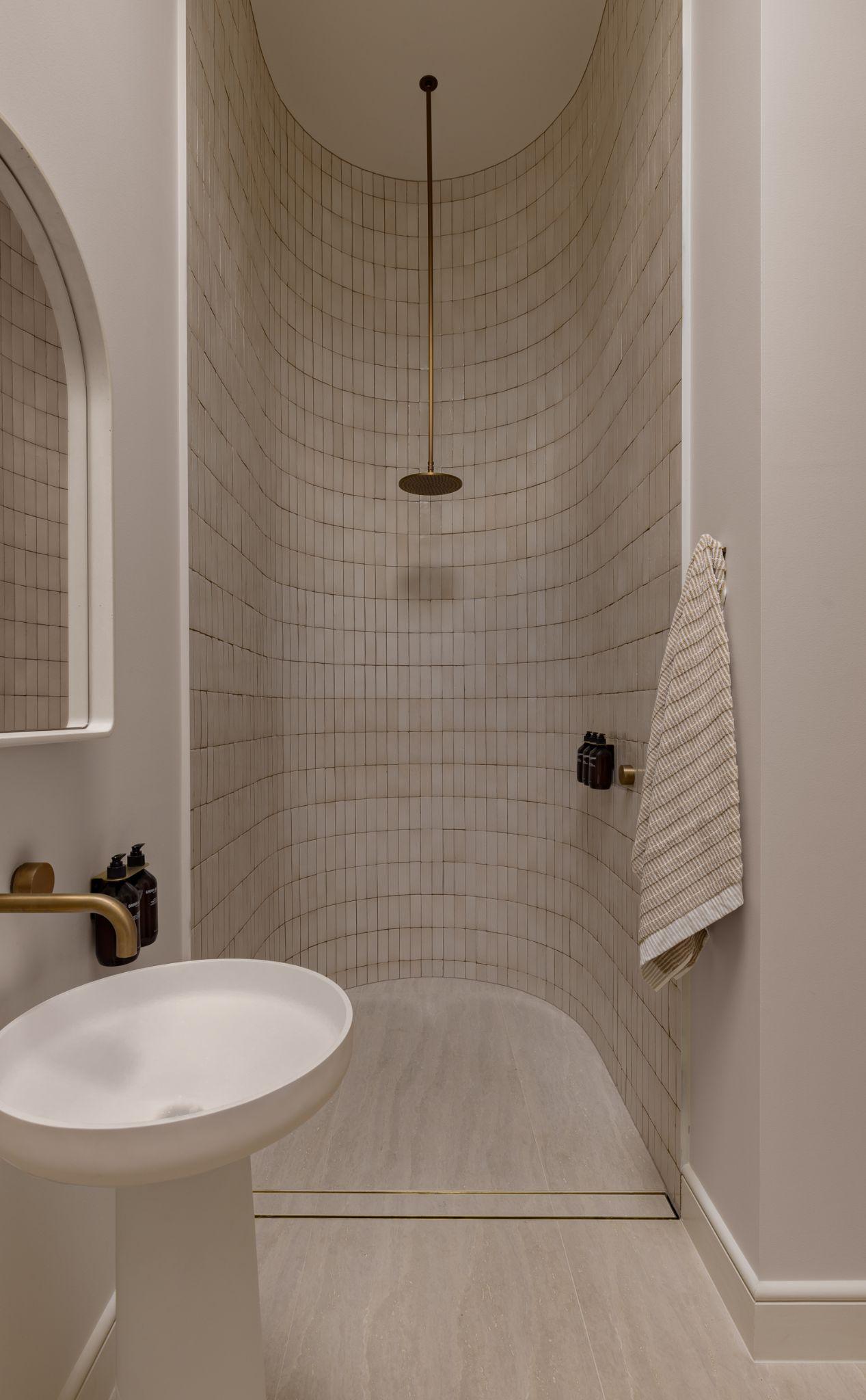
TileCloud projects show how many different ways curves can work. Some bathrooms use a single arched mirror or rounded vanity to break up the straight lines around it. Others build the shape into the room with curved shower walls, arched openings or tiled ledges.
The strongest examples don't add curves for the sake of it. The shape helps guide movement, frame a feature or make a compact zone feel less rigid. Smaller tiles and mosaics can then follow the form, while larger-format tiles on the surrounding walls and floors create contrast.
If you're saving curved design ideas, look beyond the finished photo. Notice where the curve begins and ends, what sits beside it and whether it improves the layout. Those details will help you work out whether a similar idea could suit your own home.
Planning curves into your renovation
Start by choosing the place where a curve will make the biggest difference. It might be the first doorway you see, the end of a kitchen bench where people move past or the shower wall in a bathroom. Then test the size against the rest of the room.
For tiled curves, involve your tiler before finalising the radius and tile format. Order samples and hold them against the proposed surface, paying attention to the tile size, finish, shade variation and grout colour.
Curves have staying power because they're not limited to one look. When they're used with purpose, they can soften straight architectural lines, make a space easier to move through and give familiar materials a new shape. Whether you choose an arch, a curved kitchen bench or a mosaic-wrapped detail, one well-placed curve can be enough to change the whole design look and feel.

Layla is a creative at heart, with an Advanced Diploma in Interior Design and being the Senior Marketing and Ecommerce Coordinator here at TileCloud she has a passion for staying up to date with the latest trends within the industry. Known for going down a rabbit hole on Pinterest and being a sucker for a good mood board to kick off any project.