How to Choose Kitchen Splashback Tiles: Colours, Styles and Layout Ideas
Choosing kitchen splashback tiles can feel like a surprisingly big decision.
A splashback might only cover a small section of your kitchen, but it sits between your benchtops and cabinetry, catches the light throughout the day and helps tie the entire space together. It’s also one of those selections you’ll likely live with for many years, which is why so many renovators find themselves stuck between multiple options that all seem like the right choice.
The good news is that choosing a splashback becomes much easier when you stop looking at individual tiles and start looking at the kitchen as a whole.
You might already have a colour in mind, and that’s a great place to start. But if you’re struggling to settle on a particular tile, it can help to step back and look at the kitchen as a whole. The finishes you’ve already selected, the role you want the splashback to play and the tile shape you choose can all help guide the final decision.
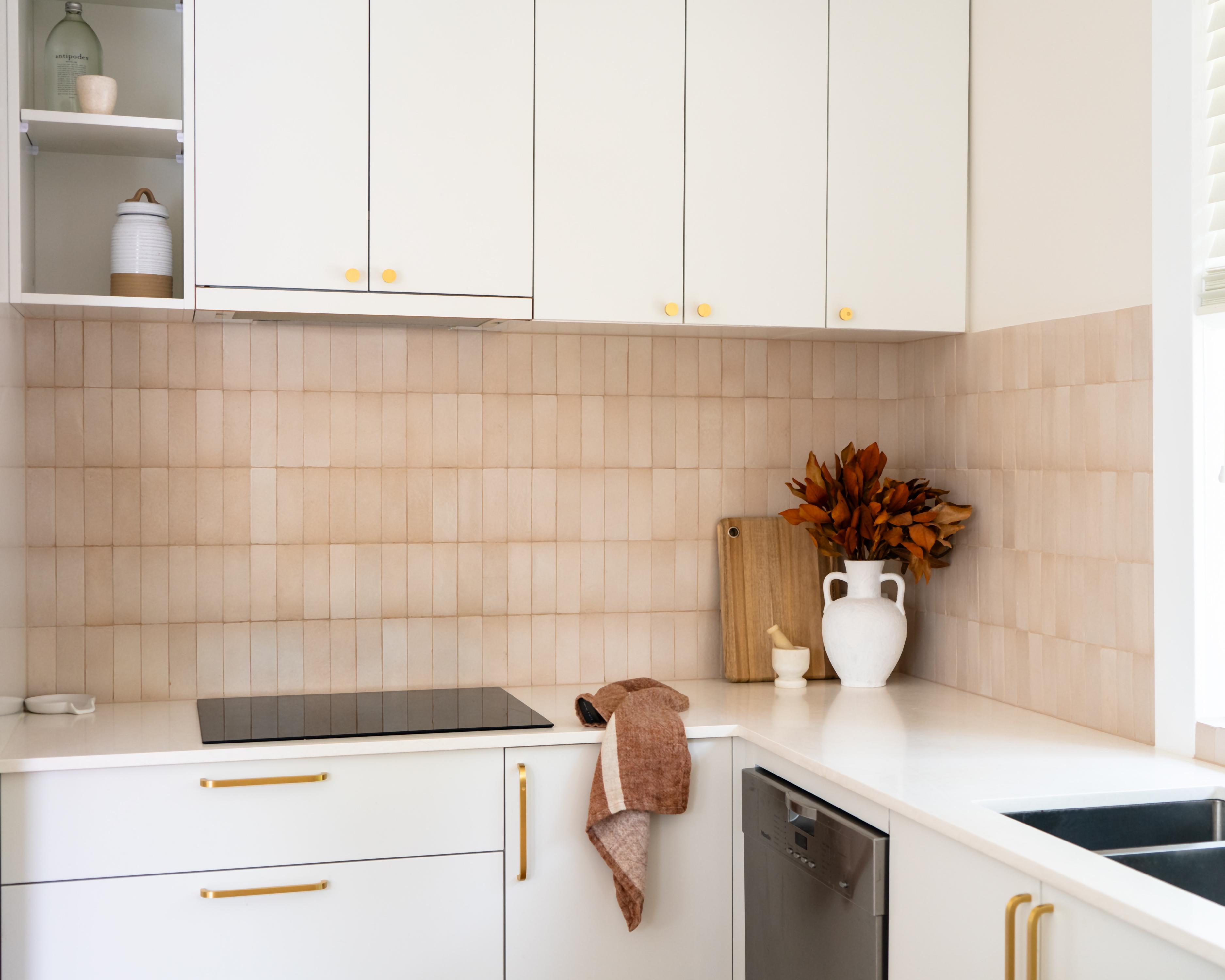
Start With Your Overall Kitchen Style
Before comparing tile shapes, finishes or grout colours, spend some time looking at the style of kitchen you’re creating.
This doesn’t mean following a strict set of design rules. It’s simply about understanding the look you’re naturally drawn to and using that to guide the decisions that follow.
For example, many coastal kitchens rely on a palette of whites, light timbers and natural materials. In these spaces, texture often does more work than colour. A handmade look tile like the Newport can add detail without introducing another dominant feature into the room. The result feels relaxed and effortless while still giving the eye something interesting to land on.
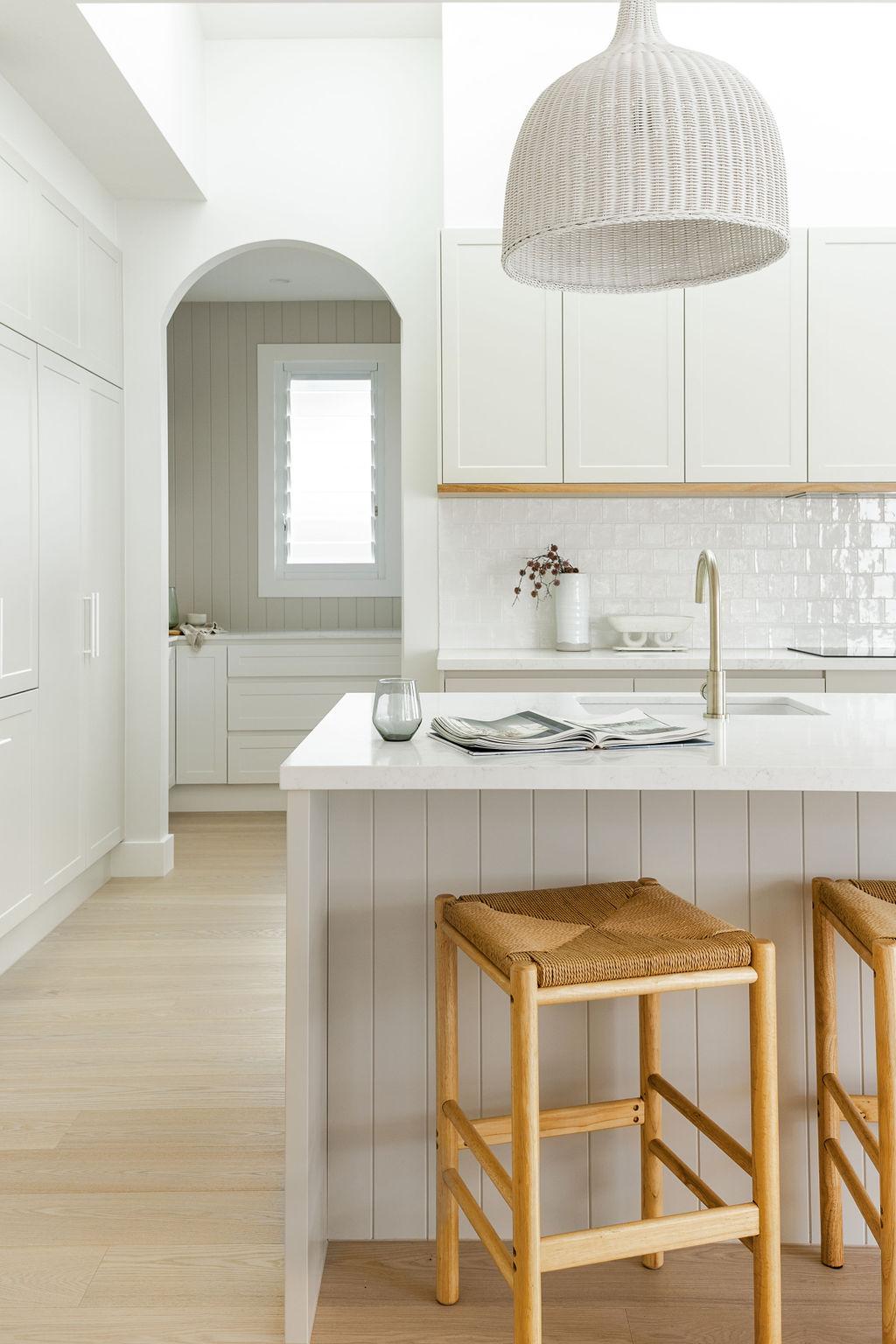
Mediterranean kitchens tend to take a different approach. Rather than aiming for everything to match perfectly, these spaces often feel more collected over time. Handmade look and zellige inspired tiles work well because slight differences in colour and finish help add warmth and personality. Collections like Noosa bring that feeling into a kitchen without looking overly polished.
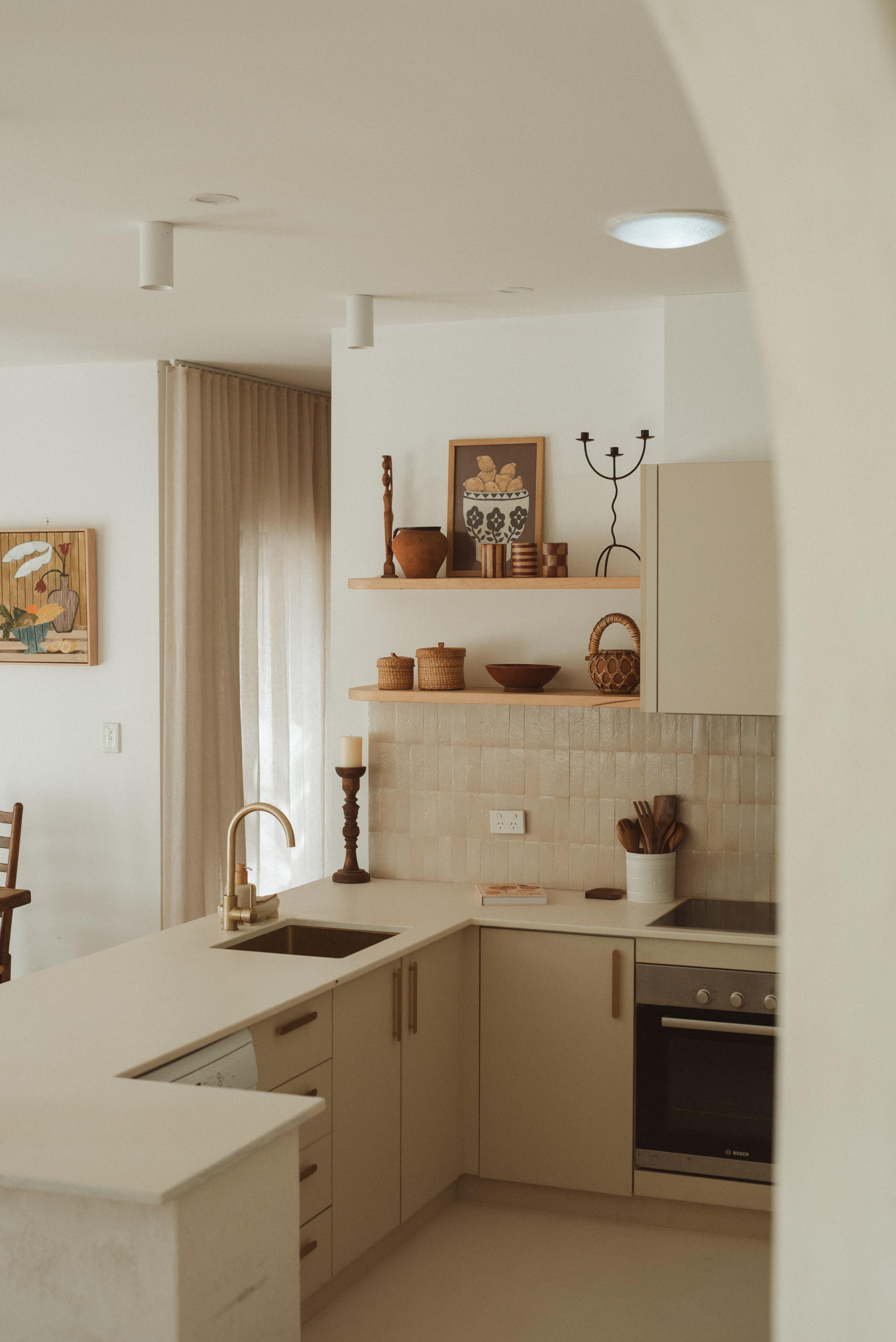
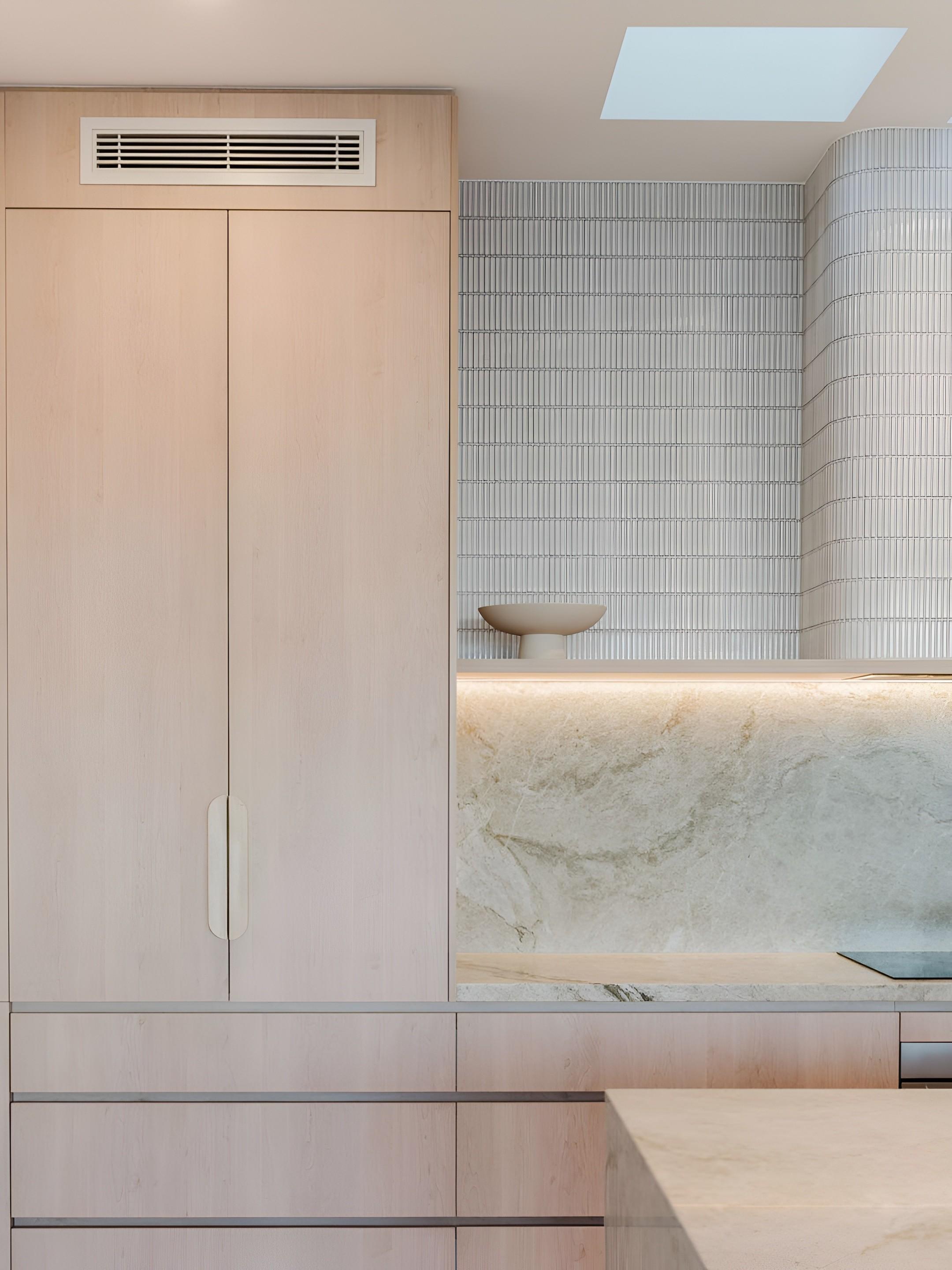
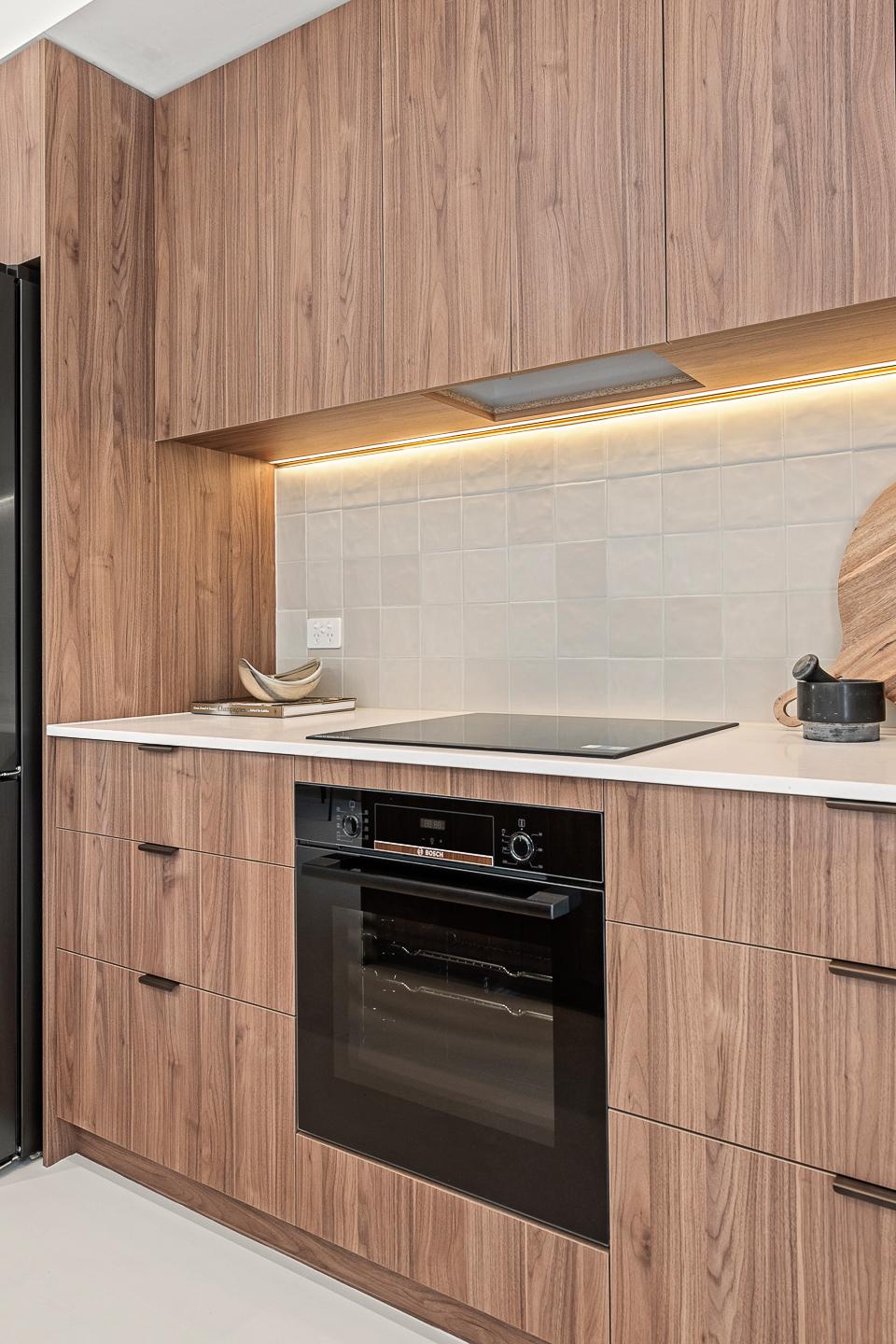
Modern kitchens are often at their best when they feel simple and uncluttered. If you’ve invested in beautiful joinery, a statement benchtop or carefully selected lighting, the splashback doesn’t always need to be the hero. Larger format tiles and stone look collections can help create a kitchen that feels calm and cohesive while allowing those other finishes to stand out.
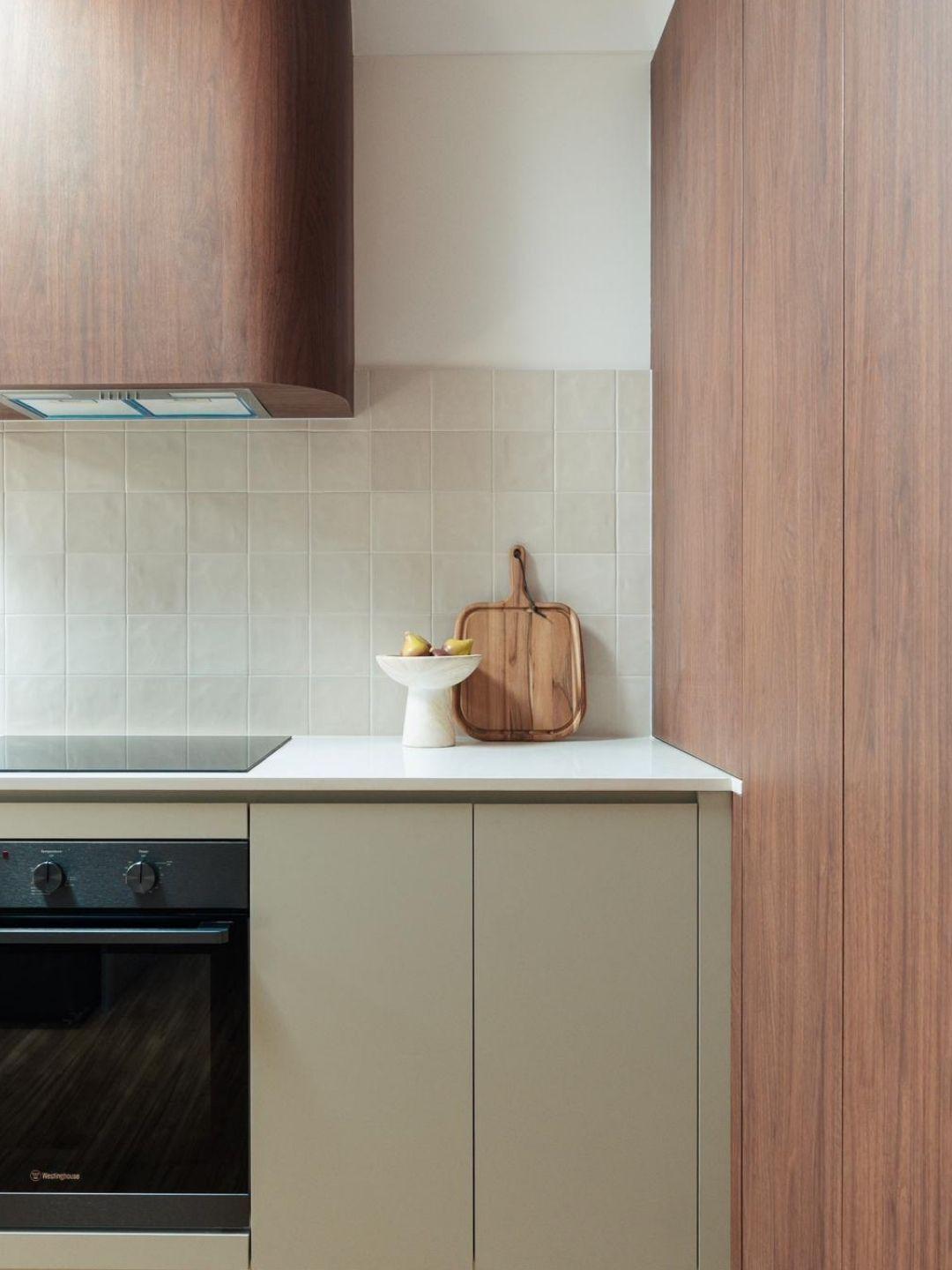
Farmhouse kitchens sit somewhere in the middle. They’re warm and welcoming without feeling overly decorative, which is one of the reasons subway tiles continue to work so well in these spaces. They feel timeless, easy to live with and pair naturally with timber, stone and shaker style cabinetry.
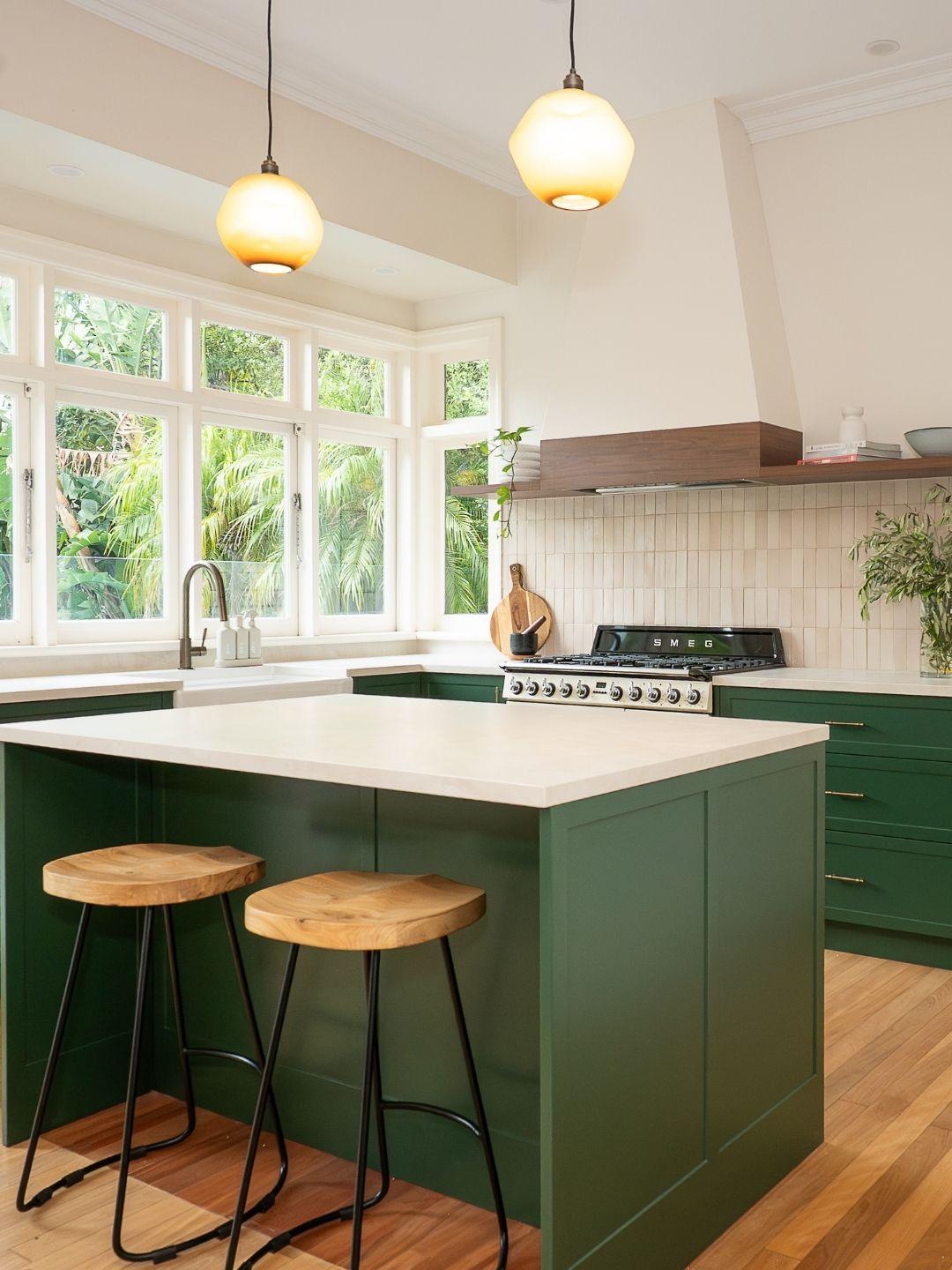
If you’re still narrowing down your style, our Tile Style Quiz, Coastal Style Guide and Mediterranean Style Guide are great places to gather inspiration before moving on to specific tile selections.
Look at the Finishes You’ve Already Chosen
One of the easiest ways to narrow down splashback options is to look at what’s already locked in. Your cabinetry, benchtop and tapware will usually have a bigger influence on the finished kitchen than the splashback itself. Once those selections have been made, you’ll often find that many tile options naturally fall away.
A heavily veined stone benchtop already introduces plenty of detail into the space. Pairing it with an equally busy splashback can make the kitchen feel crowded. If your benchtop already has plenty of movement, a simpler splashback can help the space feel more settled. The opposite can also be true. If your cabinetry and benchtop are fairly simple, the splashback can become an opportunity to introduce texture, colour or shape.
Not every finish needs to match. In fact, combining different materials is often what gives a kitchen depth and personality. The goal is simply to make sure your selections feel connected to one another rather than competing for attention. When comparing tiles, place samples next to your cabinetry, benchtop and tapware wherever possible. Looking at materials together provides a much clearer picture of how the finished kitchen will feel than viewing them separately.
Choosing the Right Tile Shape
Tile shape can have just as much impact as colour. Even when two tiles share the same finish, changing the shape can completely alter the look of the splashback and the feeling of the room.
Subway Tiles
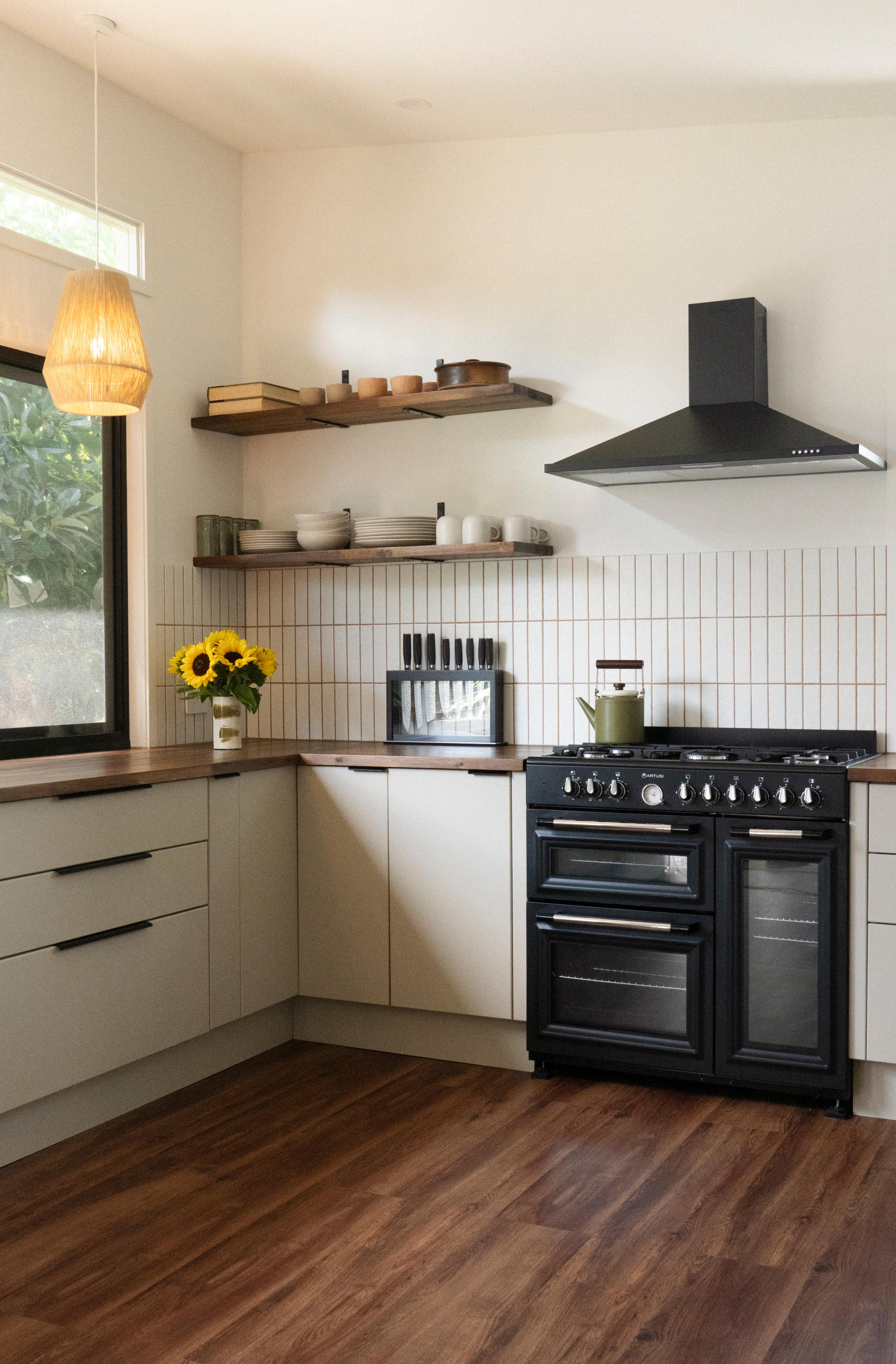
One of the reasons subway tiles have remained popular for so long is that they can adapt to almost any kitchen style. They’re equally at home in coastal, farmhouse, Mediterranean and contemporary kitchens, but their biggest strength is flexibility. The same tile can look completely different depending on how it’s laid.
A traditional brick bond layout feels familiar and timeless. A vertical stack creates a cleaner, more contemporary look. Herringbone brings more detail and can turn a simple tile into a feature. If you’re exploring subway splashback tiles, our Subway Tile Layout Guide is worth reading before making a final decision.
Square Tiles
Square tiles create a different feel to subway tiles because they’re less directional.
If your kitchen already includes a statement benchtop, detailed joinery or feature lighting, square tiles can help balance the space rather than introducing another strong pattern. They’re often a good choice when you’re looking for something simple, timeless and easy to style around. Square tiles are also a good option when you want the focus to stay on colour, texture or surrounding finishes rather than the tile layout itself.
Kit Kat and Finger Mosaic Tiles
Kit Kat and finger mosaic tiles are a great option if you’re looking for something that feels a little different to a subway or square tile.
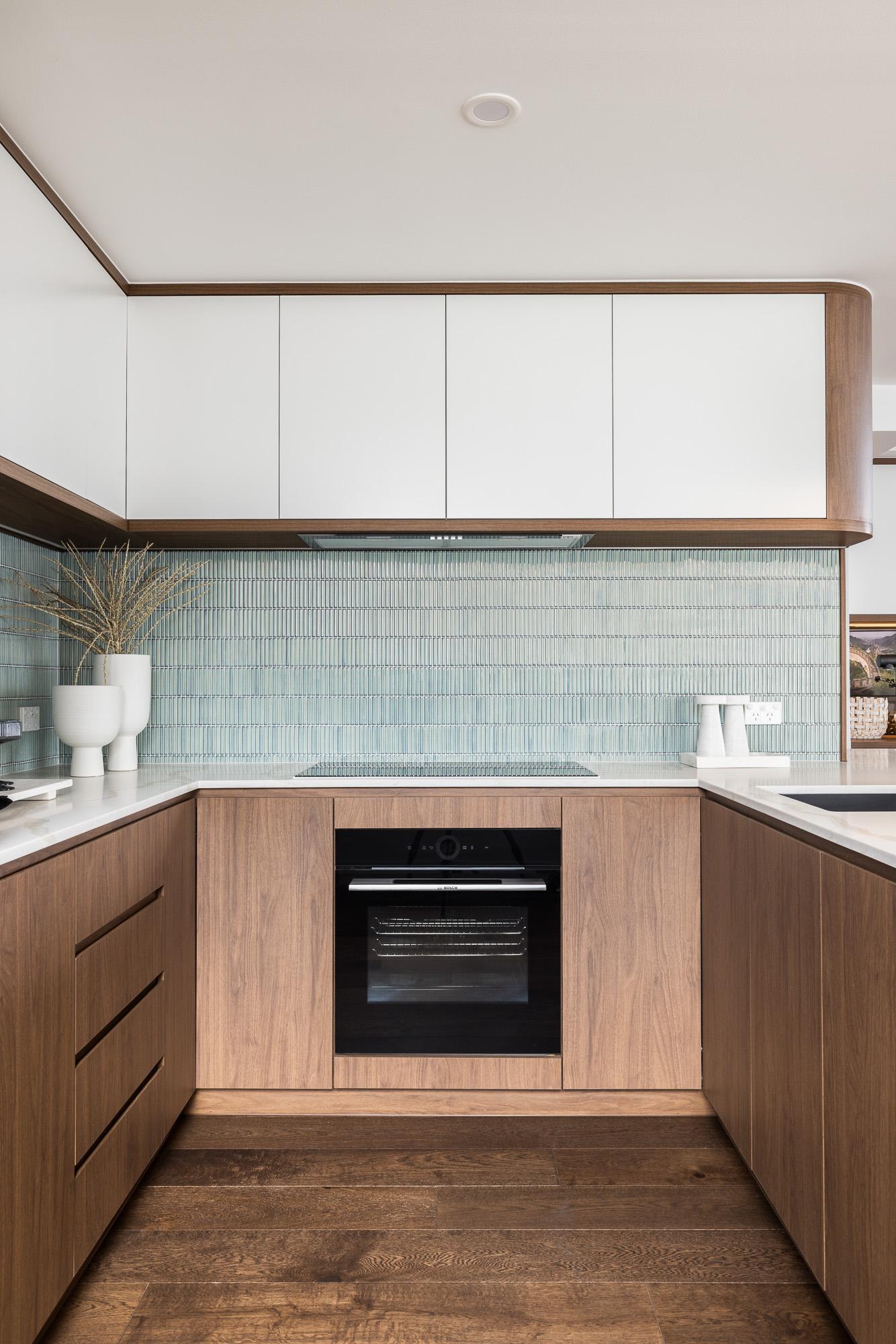
Depending on the colour and finish, they can feel playful, contemporary or highly textured. They work well in kitchens where the splashback is expected to play a larger role in the overall design. Because they’re made up of smaller pieces, they naturally draw more attention than larger tile formats, making them a popular choice for feature splashbacks.
Large Format Tiles
If cleaning grout is already on your list of renovation concerns, large format tiles are worth considering. Because there are fewer grout lines across the splashback, they’re often easier to maintain while also creating a cleaner overall look. They pair well with stone look finishes and are a popular choice in kitchens where simplicity is the goal.
When comparing tile shapes, try not to focus too heavily on trends. Instead, think about how much detail you want the splashback to contribute and whether you want it to quietly support the space or become more of a feature.
Gloss or Matte? Choosing the Right Finish
Once you’ve settled on a tile shape, the next decision is finish. Many homeowners assume this comes down to personal preference alone, but the amount of natural light in your kitchen can have a big influence on which finish will work best.
Gloss tiles reflect light back into the room, which can help brighten darker kitchens or spaces that don’t receive much natural light. They’re particularly effective on handmade look tiles because the reflective surface helps highlight the subtle texture that makes that style so appealing.
Matte tiles absorb more light and generally create a softer look. They work beautifully in kitchens where the goal is to keep the palette calm and understated, particularly when paired with larger format tiles or stone inspired finishes.
A gloss tile that looks great in one kitchen can feel completely different in another, which is why samples are so important. Seeing both finishes in your own home is often the quickest way to work out which one suits your space.
If you’re deciding between finishes, our Gloss vs Matte Tile Guide explores the differences in more detail.
Grout Matters More Than Most People Expect
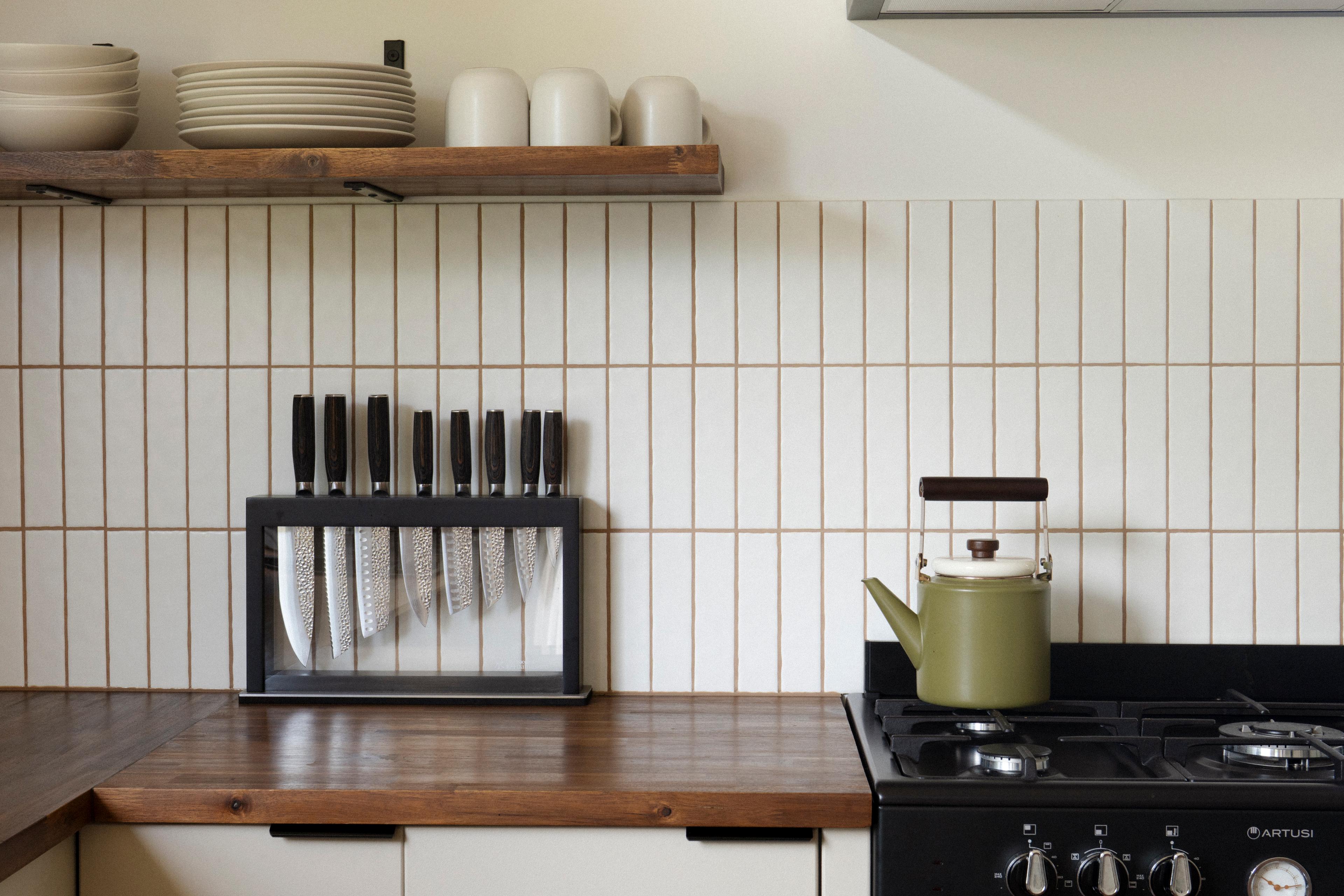
Grout might seem like a small detail, but it can completely change the way a tile looks once it’s installed. The same white subway tile can feel very different depending on the grout colour you pair it with.
Matching grout creates a softer look because the eye focuses on the surface as a whole rather than the individual tile shapes. Contrasting grout does the opposite. It highlights the shape of each tile and draws attention to the layout pattern. This becomes important with subway tiles, herringbone layouts and other designs where the pattern itself is part of the appeal.
It’s worth thinking about grout colours at the same time as you’re choosing tiles rather than leaving the decision until the very end. Doing so makes it much easier to visualise how the finished splashback will actually look.
If you’re weighing up different options, our guide to Choosing the Right Grout Colour is a helpful place to start.
Test Samples in Your Own Home
Tiles rarely look exactly the same online, in a showroom and in your own kitchen. Natural light changes throughout the day, and surrounding finishes can influence whether a tile appears warmer, cooler, lighter or darker than it did on screen.
This is particularly noticeable with white tiles, handmade look finishes and tiles with subtle differences across the surface. A tile that feels perfect in a showroom can look surprisingly different once it’s sitting next to your cabinetry and benchtop.
We always recommend viewing samples in the space where they’ll be installed. Place them against your benchtop, look at them in the morning and again in the afternoon, and compare a few options side by side. It’s one of the simplest ways to feel confident in your decision before committing to a full order.
If you’d like to compare a few options at home, our Tile Samples Collection makes it easy to test colours, shapes and finishes in your own space. And if you’re deciding between several tiles, a Design Consultation can help provide a second opinion before making your final selection.

Layla is a creative at heart, with an Advanced Diploma in Interior Design and being the Senior Marketing and Ecommerce Coordinator here at TileCloud she has a passion for staying up to date with the latest trends within the industry. Known for going down a rabbit hole on Pinterest and being a sucker for a good mood board to kick off any project.